


Four Specifications To Know and Stay Within For Safe Towing
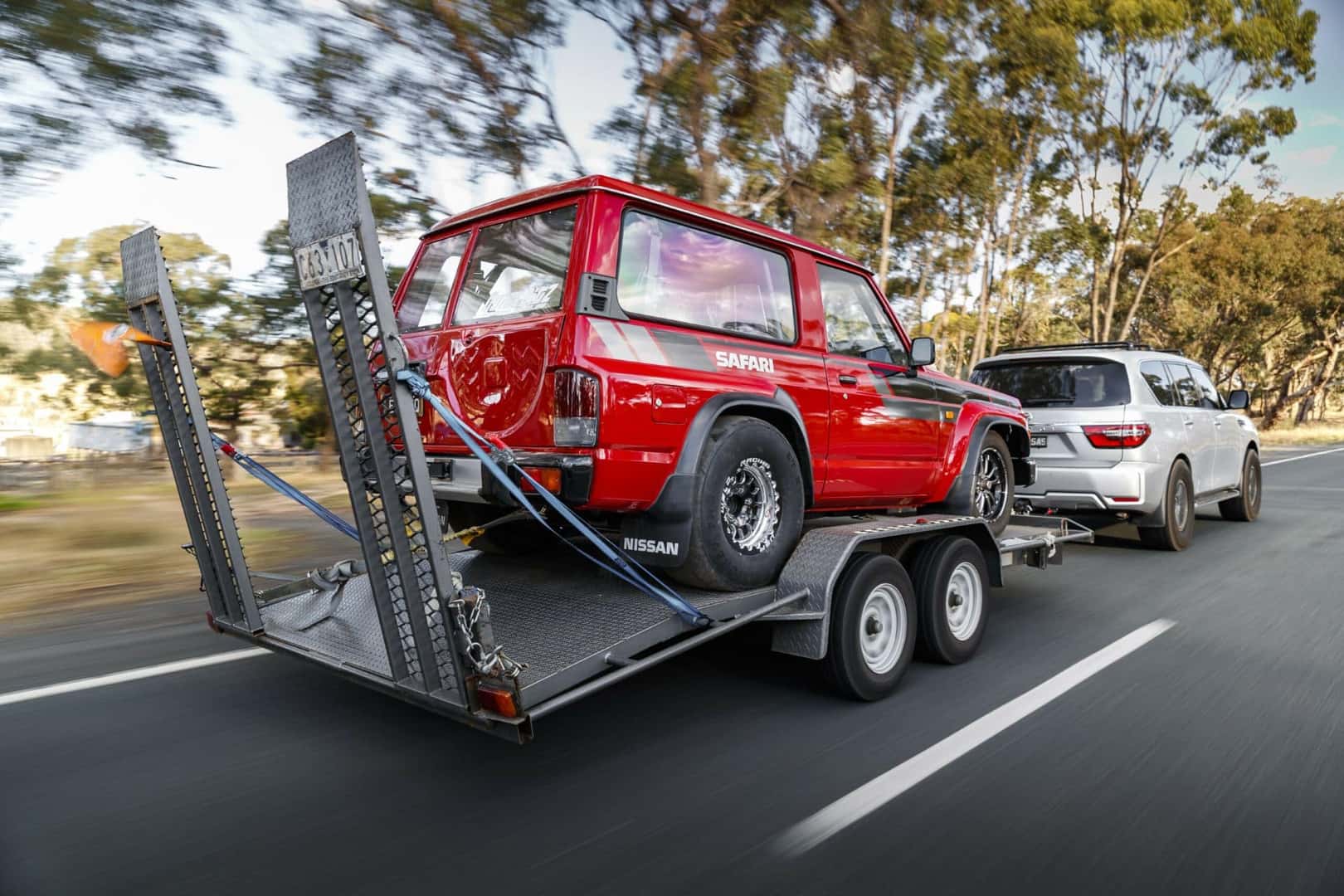
The ability to tow a trailer opens the door to a variety of enjoyable lifestyles, such as boating, comfortable camping, and various recreational motorized vehicle activities. Many people, of course, also utilize towing in their work. Alderman Automotive understands that safe towing begins with a grasp of a few key specifications and a little bit of math.
 Trailer Weight and Maximum Towing Capacity
The first two figures you need to know are your trailer’s weight and your vehicle’s towing capacity. The latter should be in any listing of the vehicle specs and on a sticker in the driver’s door jamb. The trailer weight should be displayed somewhere on the trailer, particularly for trailers with a relatively fixed weight, such as an RV and a trailer for a specific boat model. For cargo trailers, you need to know the weight of the cargo and make sure it is within the trailer’s specified payload capacity. Making sure your trailer is within your towing vehicle’s towing capacity is just the beginning, however.
 Tongue Weight
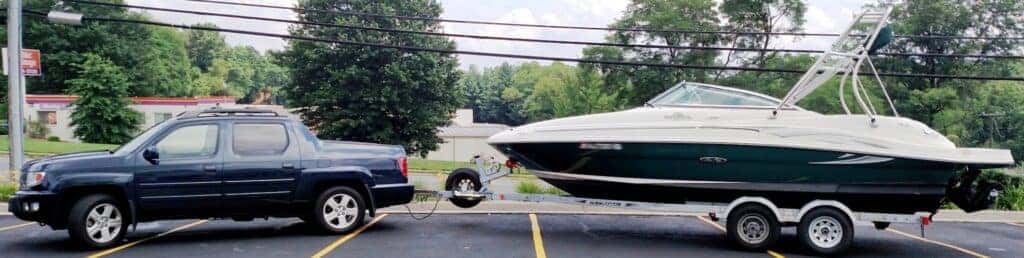
Just because your vehicle is rated for 5,000 pounds and your trailer weighs 4,800 pounds doesn’t mean you’re all set. You also need to consider tongue weight, the weight the trailer tongue exerts on your trailer hitch. The general rule is that the tongue weight should be about 10 to 15% of the trailer’s weight.
Trailers with mostly fixed content, like an RV or a model-specific boat trailer, are designed with this tongue weight in mind. However, if you’re loading a cargo trailer, you should be aware of how you distribute the weight. When hauling a vehicle on a trailer, the tongue weight will be directly influenced by where you place the vehicle on the trailer. An exceptionally low tongue weight can also be problematic, indicating that too much of your trailer’s weight is behind the axle(s), resulting in an unstable, rear-heavy trailer. Generally, 60% of a trailer’s weight should be on the front half, leaving 40% for the rear.
The tongue weight also becomes part of another important figure to consider: your vehicle’s payload capacity. For instance, if your 8,000-pound trailer has the proper 10% tongue weight, that 800 pounds is now part of the vehicle’s payload. If your vehicle has a maximum payload of 1500 pounds, subtracting 800 lbs. now leaves 700 pounds to load in your vehicle, which includes you and all your passengers. If you exceed this amount, your vehicle could become overly stressed and possibly ride too low, especially in the rear, which could reduce the weight over the steering wheels and compromise stability.
 Gross Combined Weight Rating
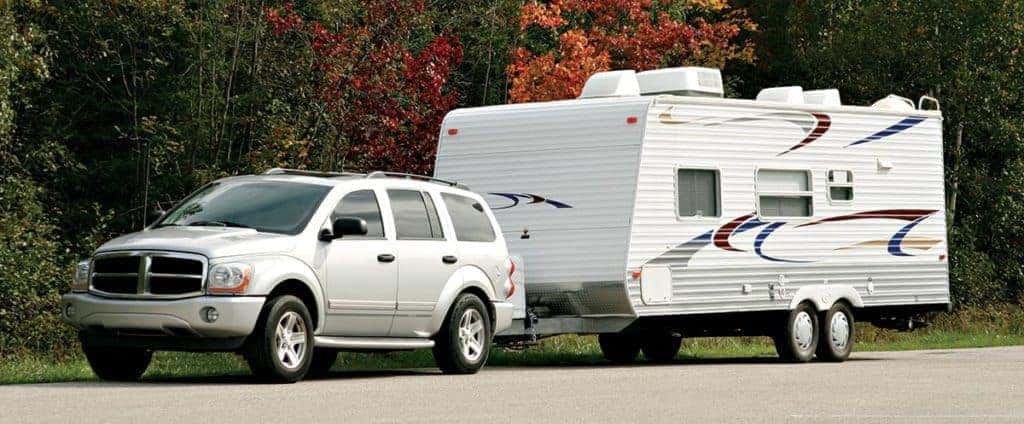
Shifting cargo weight from the tow vehicle to the trailer is a feasible but limited solution. Clearly, any weight added to the trailer brings it closer to the maximum towing capacity, and loading cargo in general adds to another specification you should stay within, known as the Gross Combined Weight Rating (GCWR). This rating indicates the maximum safe weight of a fully loaded tow vehicle and its trailer combined, accounting for the weight of your vehicle, the trailer, you, your passengers, and all your cargo. You always want to maintain a healthy buffer between your trailer and the maximum towing capacity because it’s unlikely you will be towing without any cargo or passengers.
Unless you weigh everything you load into your vehicle or trailer, staying within specifications will require quite a bit of estimating. Therefore, the first time you tow a specific trailer with your vehicle, it’s wise to have it weighed on a public vehicle scale. You can find several of these in the Indianapolis area by searching for “Vehicle scale” on a Google map, including a CAT scale just up I-69 from Fishers. After weighing your fully loaded tow vehicle and trailer, you should be able to estimate your weights on future trips with the same combination.
Keeping your weights comfortably within your vehicle’s limits can make a large difference in towing safely and confidently. Alderman Automotive service personnel should be able to answer detailed questions about your towing setup. In the meantime, we wish you safe towing.
0 comment(s) so far on Four Specifications To Know and Stay Within For Safe Towing