


The Proper Way to Strap Your Off-Roader to a Trailer
The new car industry doesn’t want to acknowledge this, but the best off-roader is probably not a Jeep Wrangler Rubicon, Bronco Raptor, Mercedes G-Wagon, or some other shiny six-figure vehicle full of oversized tires and fancy tech. Instead, it’s more likely that the 30-year-old pickup you’ve been working on, with aftermarket suspension parts, massive tires, and a body that’s half primer, half bondo, is the real winner. That’s the vehicle you can thrash on the trail until your kidneys can’t take anymore, without worrying about dents or scratches or voiding your warranty. The problem is, the off-road trails aren’t in your backyard, and that vehicle is either no longer street legal or no fun on the road, legal or not.
So, your best option is to tow it to your off-road destination on a trailer. That way, even if you damage your toy on the trail, you can load it onto the trailer, take it home, and get yourself home for that matter. There are more wrong ways than right ways to secure your vehicle to the trailer, and with the help of Motor Trend, Alderman Automotive aims to show you the correct ones.
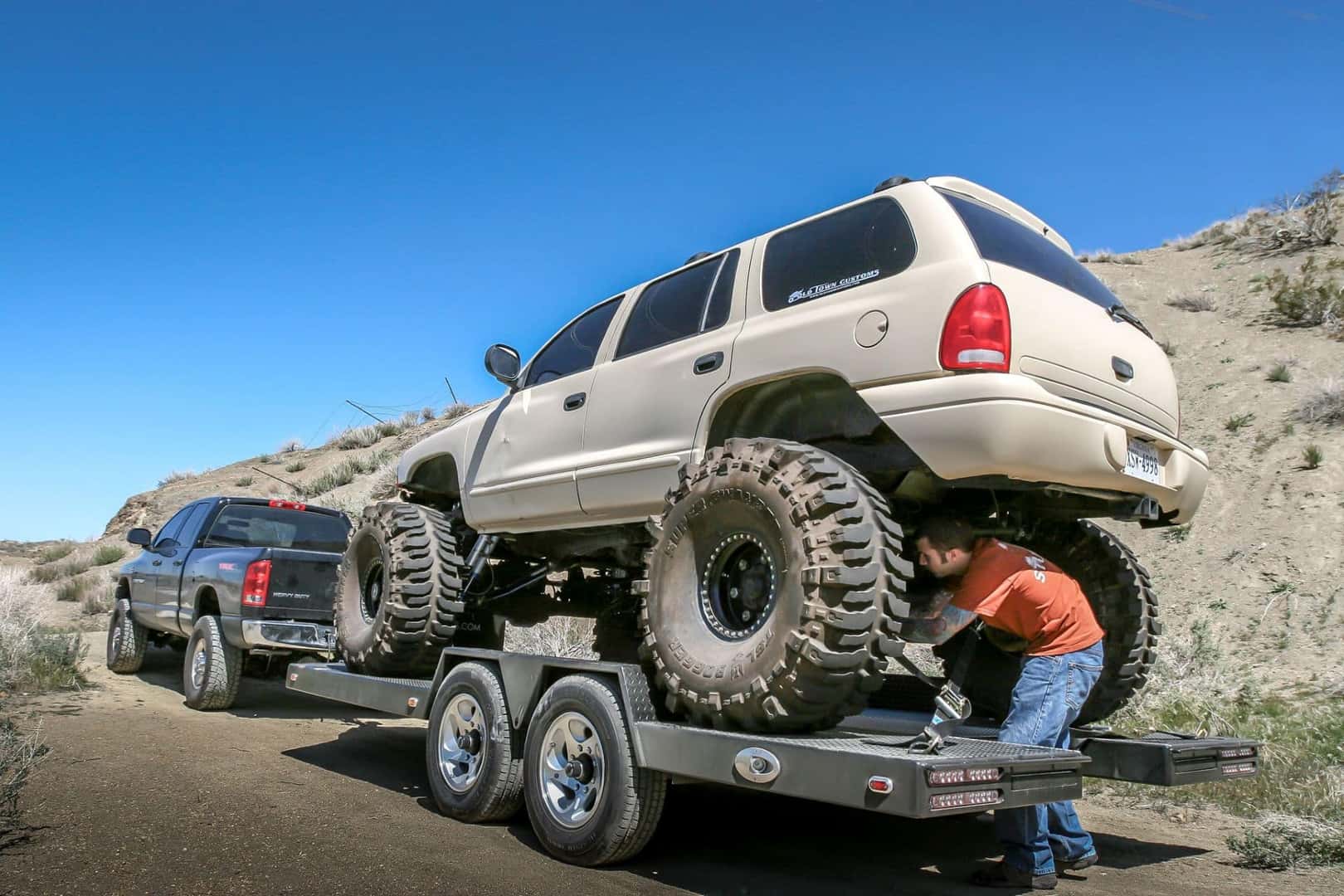
Chances are, you can poorly strap your vehicle to the trailer and still make it to the trail or home. That is so long as nothing goes wrong, like a panic stop, swerving to avoid something or someone, hitting an ice patch in a curve, or… well, the list of potential on-road mishaps is long.
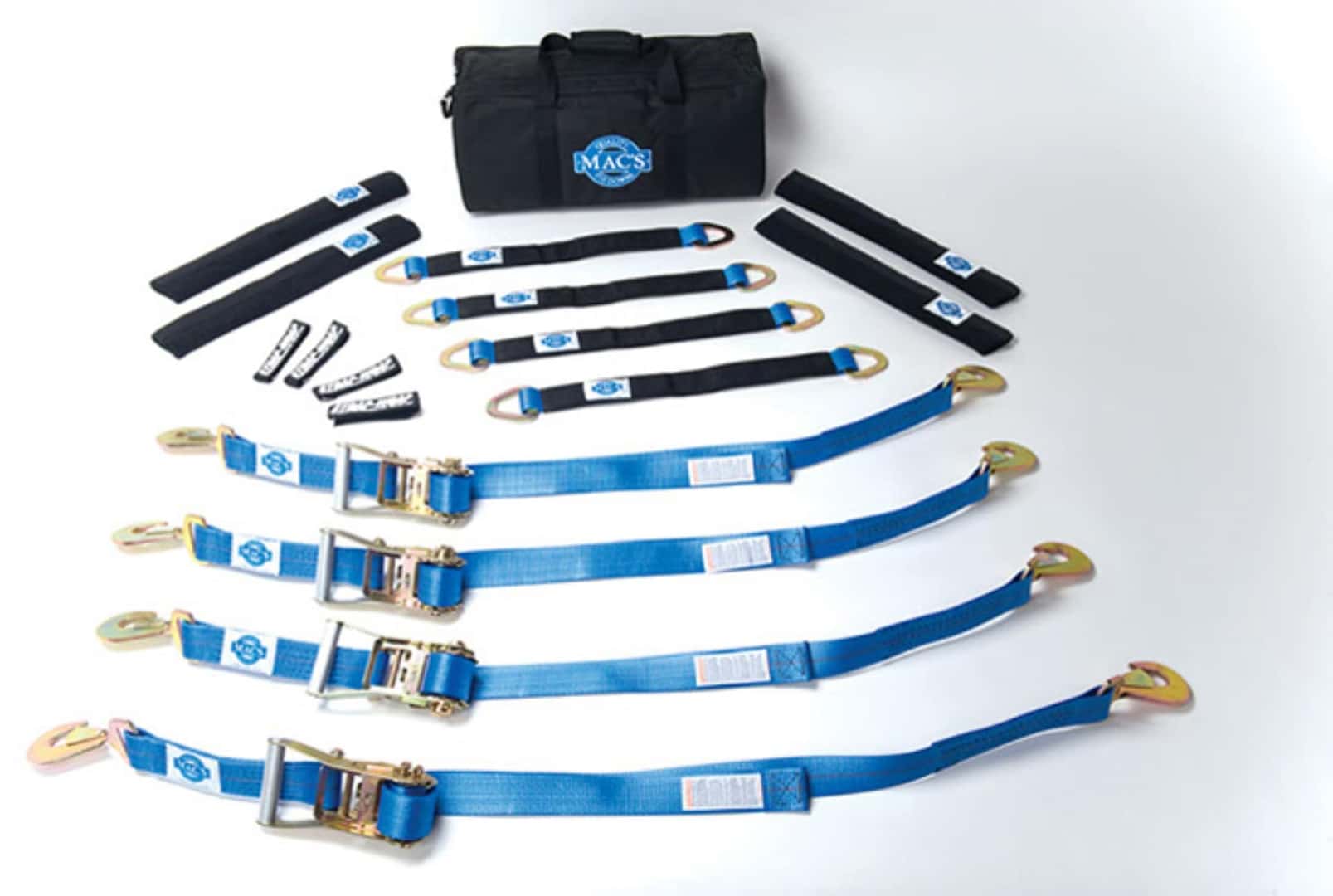
The first step is not to go cheap on the tie-down straps. As Motor Trend states, “If you have the money to buy a trailer and a tow rig, to own a vehicle that gets towed, and to fill two vehicles with fuel for a trip to the trail, then we bet you have the money to buy good straps”. They specifically mention Mac’s Custom Tied-Downs, featuring a set of four straps and ratchets for $150 and $225, depending on how fancy you want to get, and other similar strap systems are readily available. Always use at least four straps, one for each corner.
Next, position the vehicle to achieve optimal weight distribution, both front and rear of the axle. Put the vehicle in low range, park, or first gear (if you have an automatic transmission), and then engage the parking brake. The last thing you want is for your vehicle to roll on its own.
Ideally, your trailer anchors should be on the deck, allowing you to secure the vehicle and make the vehicle and trailer as much like one unit as possible.
Avoid bumpers, recovery hooks, or anything on the comfortable side of the suspension. Bouncing from the suspension can cause the straps to loosen and rebound sharply, weakening them over time. Instead, focus on components that are not suspended. Motor Trend recommends wrapping the strap around the axle tubes, which are relatively round and smooth in shape. The lower A-arm in the front is also effective if it is smooth enough. You want to avoid components with sharp corners or edges, as they can cut into your straps over time. Of course, make sure you avoid wrapping around brake lines or electrical wiring.
There is a debate about whether to cross the straps or not. The pro-cross side highlights the advantage of isolating forward, backward, and side-to-side movements. The counterargument is that if the vehicle is properly strapped, lateral movement isn’t a significant issue, and crossing the straps can cause problems. If one comes loose, the vehicle may shift to the opposite side, loosening the strap at the opposite angle. If all the straps are straight and one becomes loose, the remaining three will still hold the vehicle in place.
Some people cross their straps to accommodate a short trailer. A better option is to get a set of Mac’s Cinch Pack straps, which combine the axle strap and ratchet strap into one piece that wraps around the axle and is then tightened. Using the ratchet with its built-in hook reduces the total length from the hook to the axle tube.
When tightening your ratchet strap, turn the ratchet drum so the strap wraps around it two or three times before tightening it with the ratchet handle. This extra friction around the drum helps keep the tension in place, since a single wrap can come loose.
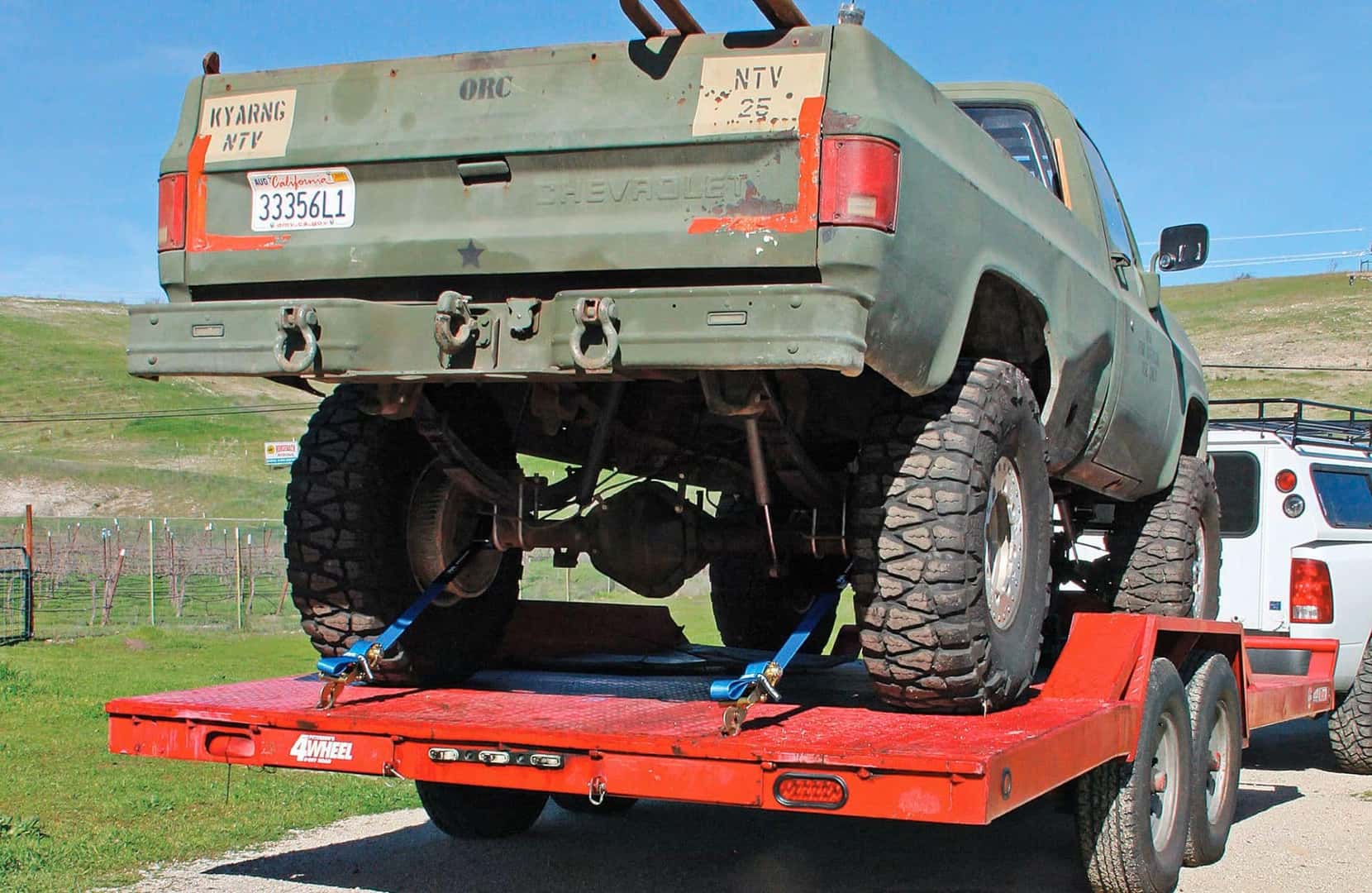
Once your vehicle is fully ratcheted down, you are likely to have a fair amount of excess after the ratchet. Don’t let these dangle or flail around in the wind, as they will get frayed and shorten the life of the strap. Fold them up and secure the bundle using Velcro straps, a small bungee cord, or even just a rope.
Follow these steps, and you’ll confidently tow your trailered vehicle. Don’t hesitate to ask Alderman’s service department if you have questions, or reach out to our sales department if you’re looking for a proper towing setup or a towed vehicle to get your off-roader project started.
0 comment(s) so far on The Proper Way to Strap Your Off-Roader to a Trailer