


What To Have In Your Car’s Emergency Kit
We have all lived and grown up with cars, so they are a pretty easy thing to take for granted. But they are still pretty amazing things when you stop to think about it. Just the idea of what they provide is astonishing: without any preparation, we can dash off and head to some location that would have taken a day’s ride by horse for all of mankind’s history up to about a century ago. We don’t think about this at all until something goes wrong, and we find ourselves a long way from home and help.
Fortunately, even the smallest vehicles have room for emergency kits, which will suddenly become your favorite thing in the car when you need it. Alderman Automotive has some tips on what to have in your emergency kit.
Your phone, of course, is your main emergency tool, so it’s best to keep it plugged in and fully charged at all times. Remember that if you find yourself stranded in the middle of nowhere, that place may be known for spotty cell coverage. You might have to travel on foot to locate a signal. At this point, a portable charger would come in handy.
There are two categories of items to include in an emergency kit. The first consists of things that can help you get moving if something goes wrong. The second category includes items to keep you safe and healthy if you cannot address the problem and must care for yourself and your passengers until help arrives.
 Tools to Get You Moving Again
Obviously, you can’t expect to have all the tools and expertise needed to handle anything that goes wrong with your car. However, there are some essential items that are beneficial to keep on-hand for the most common unexpected incidents. These are the basics that can be useful in any situation:
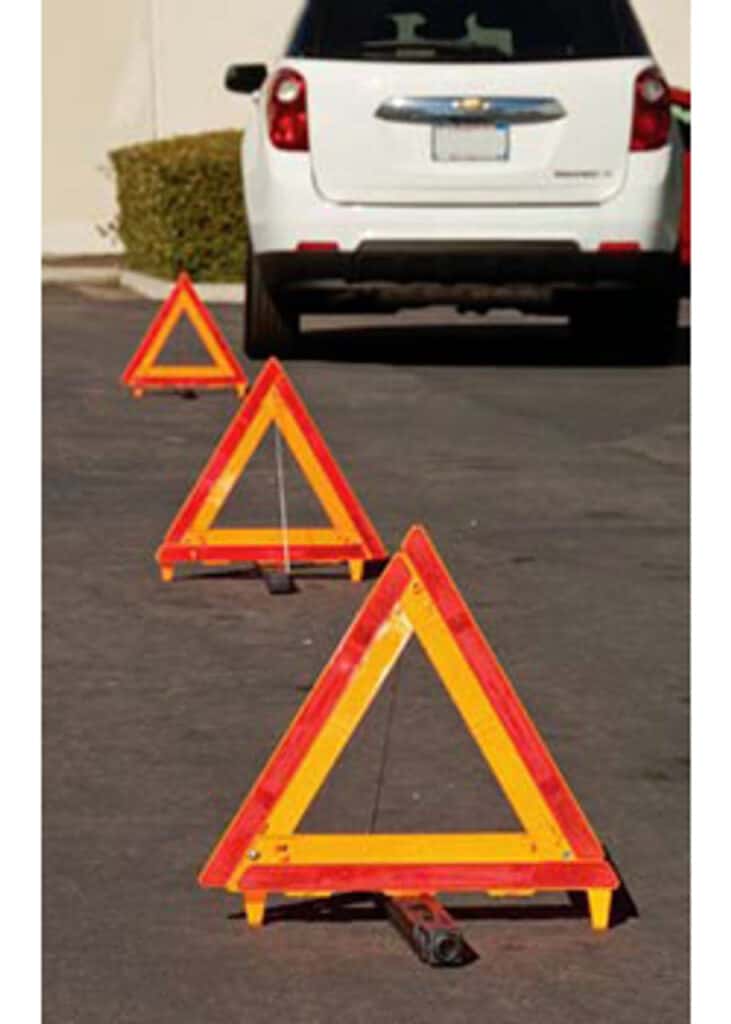
- Emergency Triangle Reflectors—These are to warn vehicles to steer clear of your stopped vehicle and also signal that you have a problem and could use help.
- Work Gloves—Whatever you’re working on will be dirty, and a pair of these keeps the dirt off your hands and interior. They can also protect your hands from getting burned on hot parts.
- Headset Flashlight—An LED flashlight can be very bright and lasts a good while. Having one with a band that wraps around your head allows you to work with both hands. Have at least one, but the more, the better. Spare batteries are also a good idea.
- Leatherman-Type Multi-Tool—Featuring pliers, flat- and Phillips-head screwdriver tips, a knife, and various other implements, this tool elevates the Swiss army knife concept and can address numerous small problems.
- Duct Tape and Zip Ties—If something breaks loose from where it should be, either of these or a combination of both offers a good chance of reattaching it until a more permanent solution is accessible.
- Jumper Cables—Modern batteries last longer than ever, but they can give little warning before failing. Additionally, something as simple as leaving a map light on and working later than usual can leave you stranded. Having a set of jumper cables on-hand and knowing how to use them is essential. While you still need the assistance of someone else’s car, it’s much harder for someone to turn you down when you are standing there with the cables in-hand.
- Inflated Spare or Proper Repair Kit—If you have a spare tire, check its inflation regularly, especially before a road trip. More and more vehicles are forgoing the weight and space of spare tires in favor of small repair kits. Familiarize yourself with how to use it before the need arises.
 Survival Items
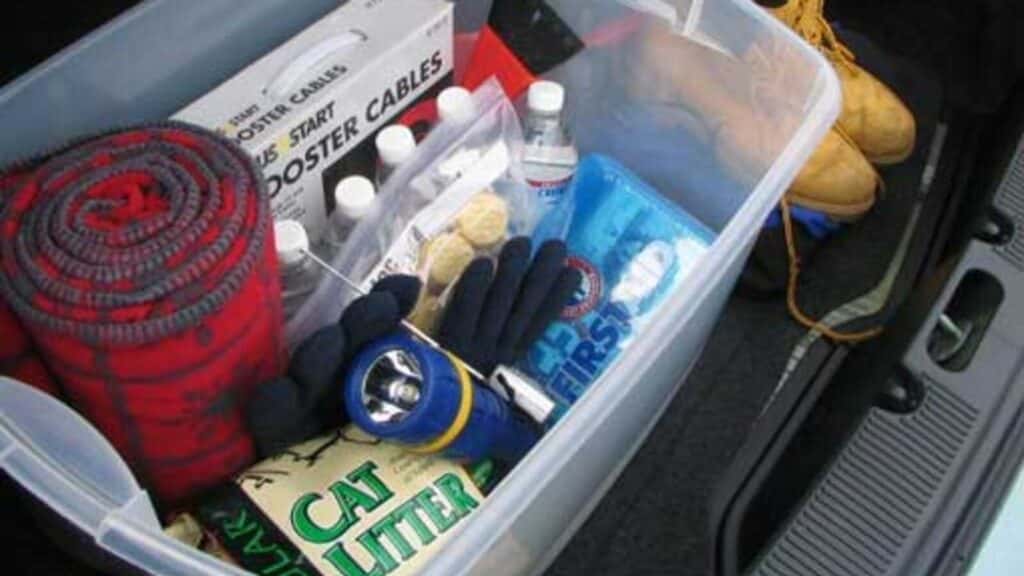
If your vehicle never leaves town, this may be less of an issue, but anytime you head out to wide-open spaces, you should be prepared to spend at least 24 hours out there without help.
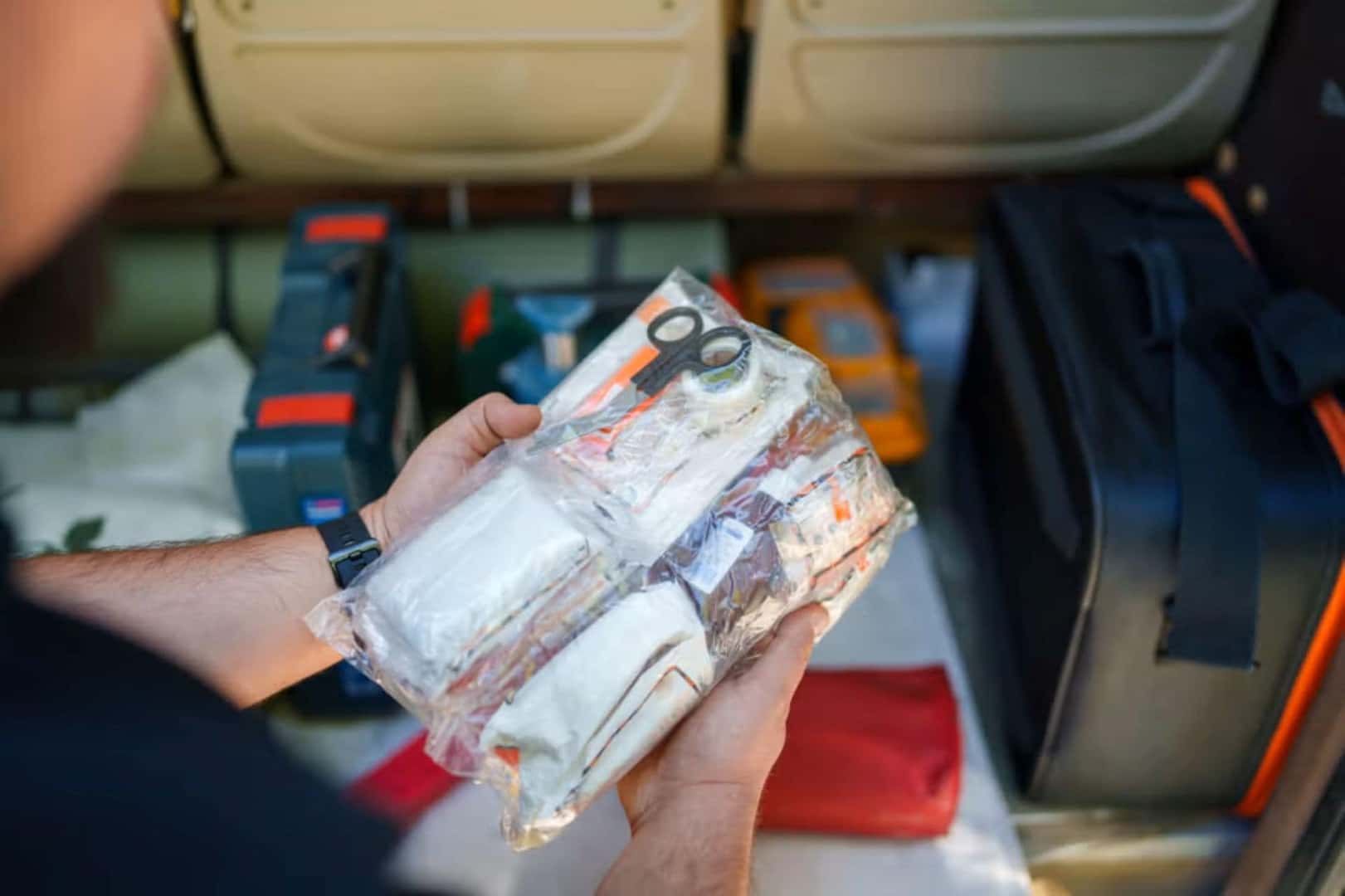
- First Aid Kit—Every car should have one. Buying a well-stocked kit with a handy case is pretty easy and inexpensive, but you can put one together yourself, with a minimum of:
- Bandages of various sizes
- Gauze and medical tape
- Antiseptic wipes
- Burn ointment
- Disinfectant
- Pain reliever
- Keep in mind any special needs such as inhalers or epi-pens.
- Body wraps/Blankets—Foil-type survival wraps can pack as small as a wallet. They may look flimsy, but they can retain a high percentage of your body heat. Blankets are bulkier but often provide more comfort and can also be used as soft surfaces or pillows if necessary.
- Water—A general rule of thumb for water is one gallon per person per day. So, bring a few bottles if you are traveling alone and a case if you are carrying passengers.
- Food—This will be separate from your trip snacks. Concentrate on what is nutritious and nonperishable. Energy bars are a top suggestion. If you are heading to rural America, where you could be stranded for a while, you will want somewhere between 1,800-2,800 calories per day for each person.
The tools to keep you going, like a first aid kit and extra food and water, should always be readily available. Before your cross-country trip, take a moment to consider the terrain you’ll be traveling through, the time of year, the likely weather conditions, and the needs of those journeying with you to complete your emergency kit. Alderman Automotive wishes you safe travels, and if your vehicle isn’t ideal for your next big trip, we hope you’ll visit us.
0 comment(s) so far on What To Have In Your Car’s Emergency Kit