


What Your Tire Sidewalls Tell You
People often say that tires are the most important safety feature on your vehicle. They are, after all, the only part of your car that touches the world around it (unless something goes wrong). Yet, many of us know very little about tires. They all look like black rubber donuts, and aside from size and tread patterns, they tend to look the same. Looking at the sidewall reveals the brand name and maybe the model, but a closer inspection shows plenty of useful information—especially if you didn’t buy the tires yourself, like on a used car. Alderman Automotive explains what tire sidewalls reveal and how to interpret that information.
Size and Construction
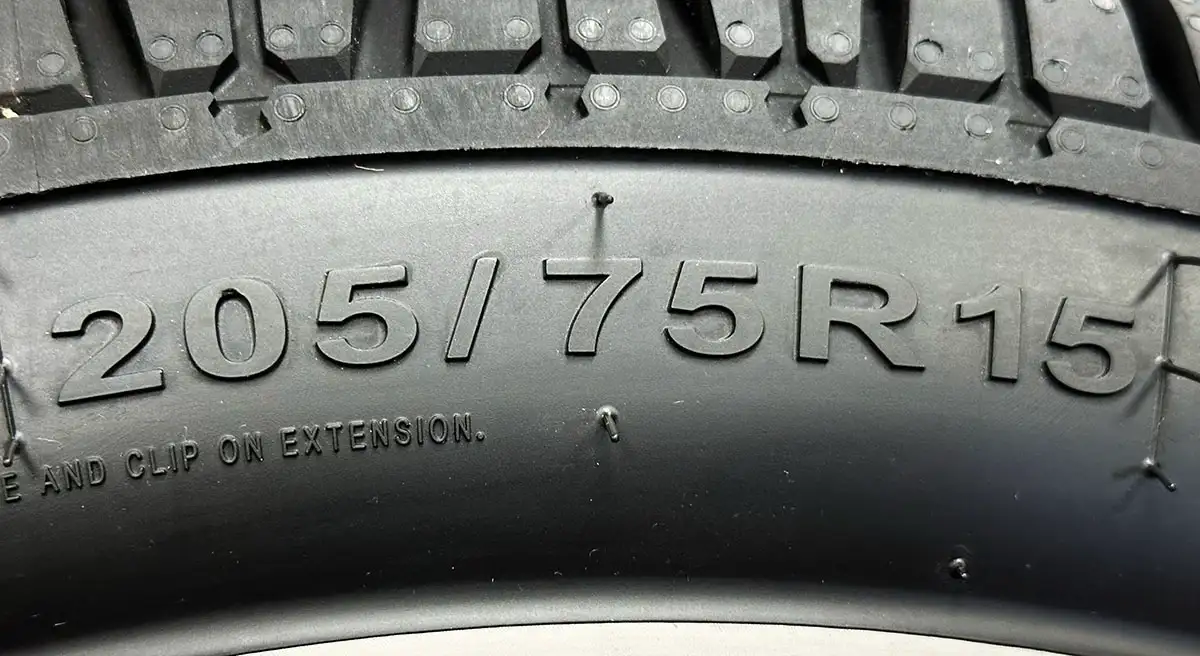
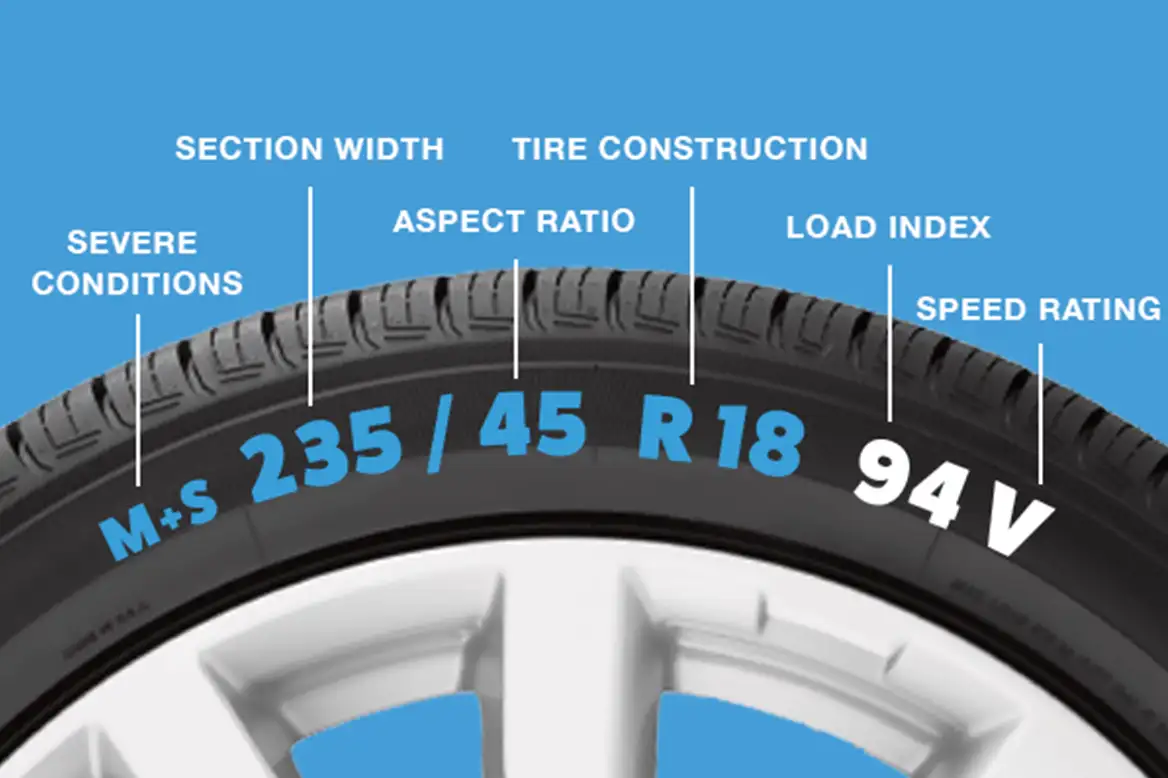
Aside from the brand and model names, the largest lettering on the sidewall is likely to be the size, which also includes a construction indication. The format is always the same: PXXX/XX RXX. To break this down, let’s use the example of: 235/45 R18
225: This indicates tread width as measured in millimeters
40: The Aspect Ratio of sidewall height divided by the tread width. So on this tire, the sidewall is 45% of the 235mm tread width.
R: Construction Type, with R indicating “Radial”, which is what you will usually see on passenger vehicle tires. It indicates that the tire’s Internal ply cords are oriented radially, or perpendicular to the direction of rotation. Other construction types are “B” bias-belted, indicating belts of fiberglass or steel for strength, but are not radial tires (radial tires have belts as well). “D” indicates the ply cords run diagonally across the tire. “ZR” also appears on some high-performance tires, indicating a radial tire with a Z speed rating (over 149 mph), though most are rated even higher. The speed rating will also appear separately on the sidewall.
18: The wheel diameter in inches to which this tire can be mounted.
Generally, you use this information to match the correct size tire to your vehicle. The size and width can vary if you have a specific goal in mind, though wheel size can only change if you match them to a new wheel size.
Load Index and Speed Rating
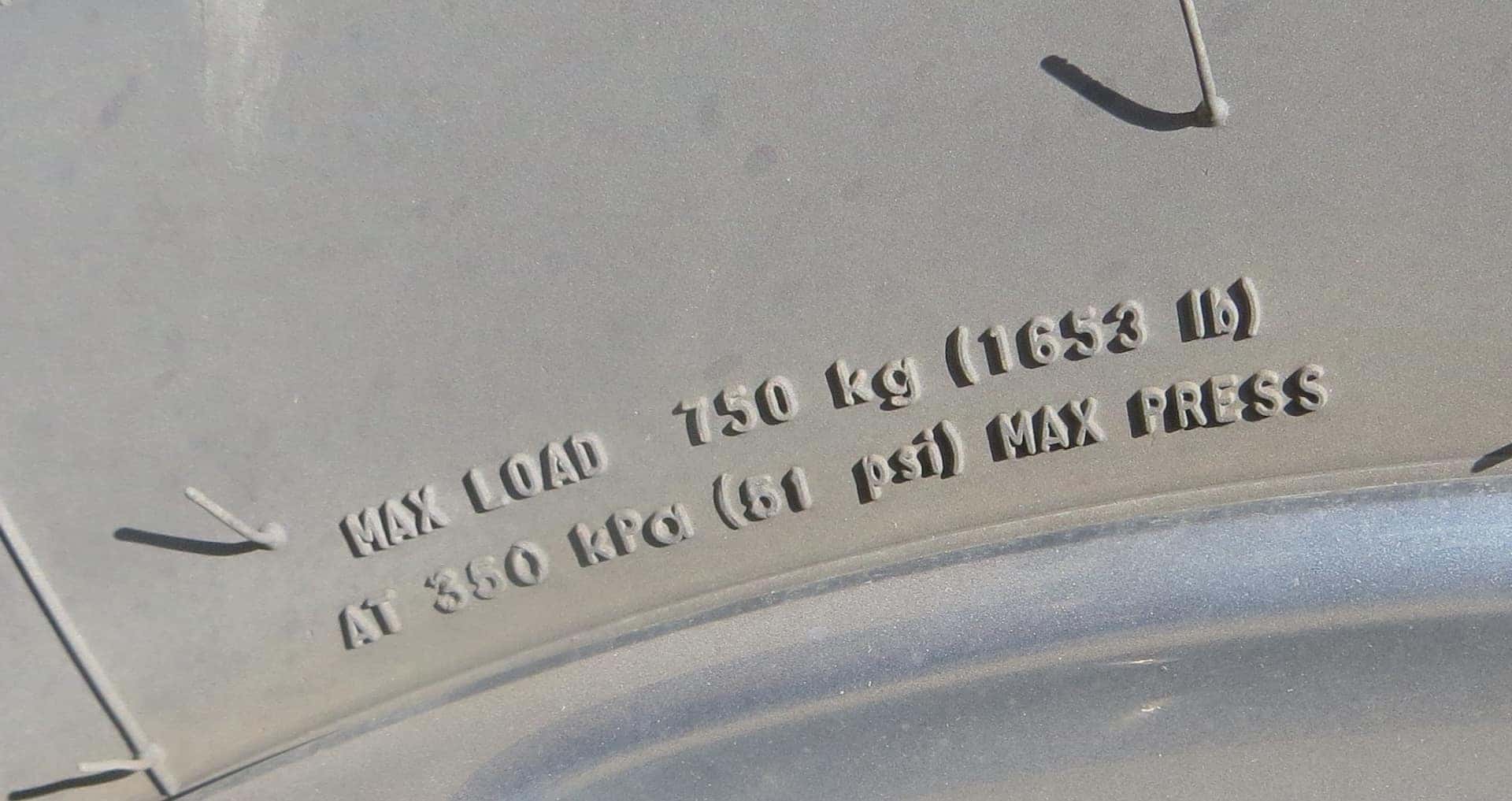
The next number in the tire code indicates the load index, and the letter indicates the speed rating. The index indicates the maximum weight the tire can support when fully inflated. Tires sold on passenger cars typically range from 70 to 126. Tires with a load index of 70 can support up to 739 pounds. A load index of 102 shows the tire can carry 1,874 pounds. Tires with an index of 126 can handle 3,748 pounds. Multiply the tire’s load index by four tires to find the maximum load capacity. The load capacity is often spelled out specifically in pounds elsewhere on the tire, often by the max. PSI rating.
Temperatures build as speed increases, causing some tires to lose their integrity at certain sustained, high speeds. All tires are assigned a specific speed rating based on their recommended maximum speed, which is typically higher than the speeds expected for that model. Starting with “L”, the farther the letter occurs in the alphabet, the higher the rating, though “H” is an exception, and there is no “X” speed rating:
Code Max MPH
L: 75
M: 81
N: 87
P: 93
Q: 99
R: 106
S: 112
T: 118
U: 124
H: 130
V: 149
W: 169
Y: 186
(Y) 186+
It should be noted that these ratings apply to relatively new, well-maintained tires and do not apply to tires with worn treads, older than six years, or that have been damaged in any way.
Recommended Use
Usually, just after the size and construction code, you will see letters indicating the recommended use for the tires. Here are the most common codes:
A/S This is the most common tire indicating an all-season tire. It is a bit of a misnomer, as A/S tires aren’t really ideal for areas with abundant snow in terms of tread, though they may remain acceptably pliable in both freezing and summer temperatures.
M+S Also seen as M/S, or M&S. They indicate all-season tires with a tread better suited for mud and light snow. However, they are not required to pass a standardized performance test in the snow unless they are accompanied by the 3PMSF symbol.
A/T: This indicates tires that are legal and relatively safe for the road but are focused on off-road use, such as dirt, gravel, or light snow, and can be noted for their deep chunky treads.
M/T Standing for Mud/Terrain, these tires are for more extreme off-road use with very deep and wide-spaced tread sections. They are legal on the road but offer poor on-road comfort, increased noise, and reduced fuel efficiency.
No Letter: The absence of any code will generally indicate a “Summer Tire”. These are designed to provide very high traction on dry roads in warm and even hot conditions, but are likely to lack wet-surface traction and will become too hard for acceptable performance in freezing conditions.
3PMSF Symbol: It stands for “Three-Peak Mountain Snowflake,” and it is indeed a graphic of a three-peak mountain with a snowflake inside. It is found on M+S tires that meet strict performance and operating-temperature requirements for heavy-snow surfaces. All certified winter tires will have this symbol. These tires are sometimes mandatory in certain regions of Canada, Europe, and some U.S. states at certain times of the year.
Tire Date Code
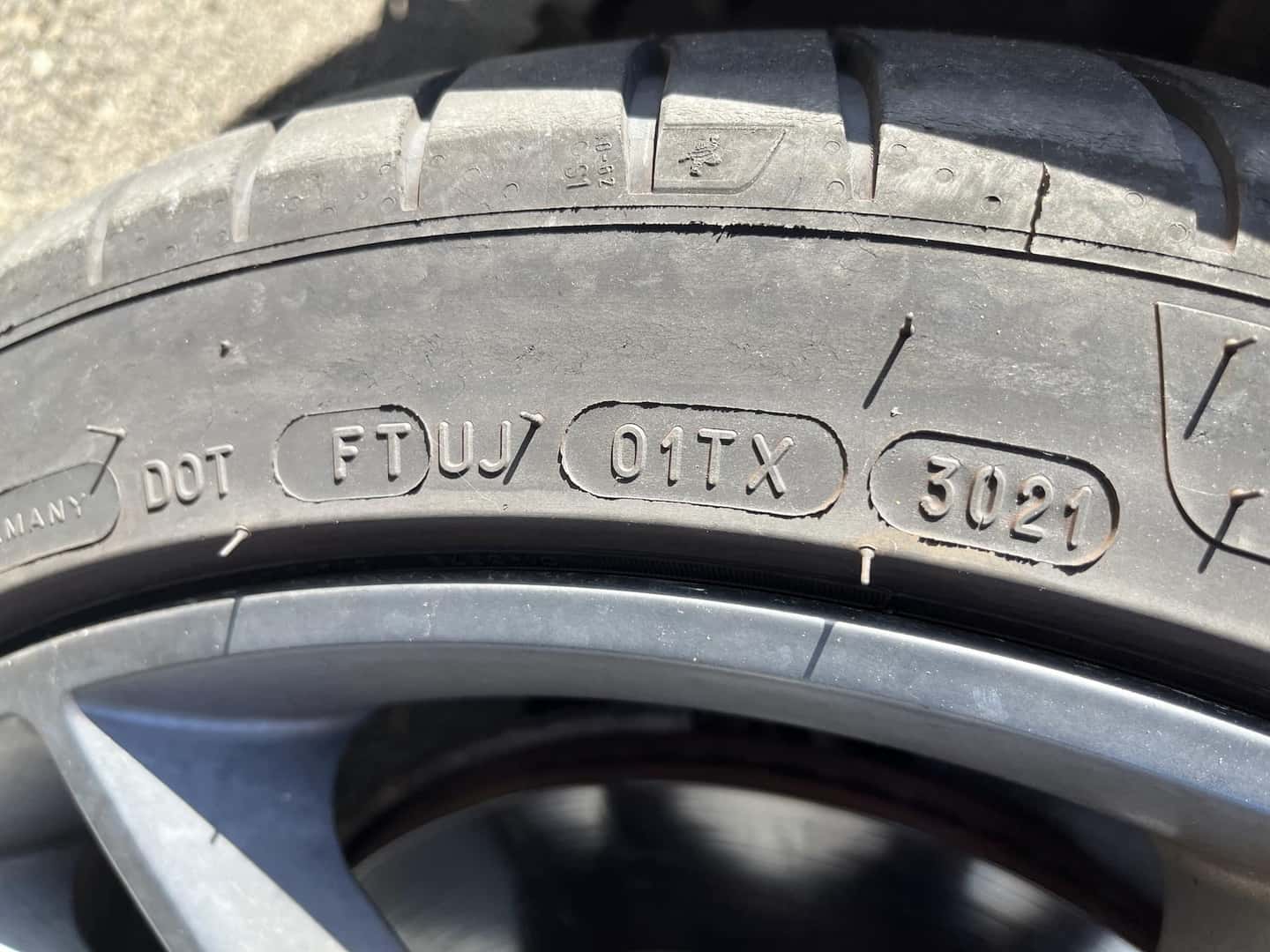
Particularly for those purchasing a used car, all tires have a date code. This is preceded by the letters DOT (Department of Transportation), two sets of alphanumeric characters we
will get to later in the article, but ending with four numbers. The last two of those four numbers indicate the year the tire was built. The first two indicate the number of the week in that year. Thus, “3021” indicates the tire was built in the 30th week of 2021.
Tire age is important because rubber compounds oxidize over time, causing tires to age even if their treads still have plenty of use left. Here are age safety guidelines from most tire manufacturers and distributors:
5 Years Manufacturers recommend a thorough inspection by a professional for signs of aging, such as cracking or flaking.
6 Years Many vehicle manufacturers recommend replacing tires at this point, as performance, especially for high-speed-rated tires, may be compromised.
10 Years Tires should be replaced, even if they appear unused or have good tread, as the structural integrity is severely compromised.
Legal Limits In some regions, tires 10 years or older are prohibited on the front axles of certain commercial vehicles.
Traction Code
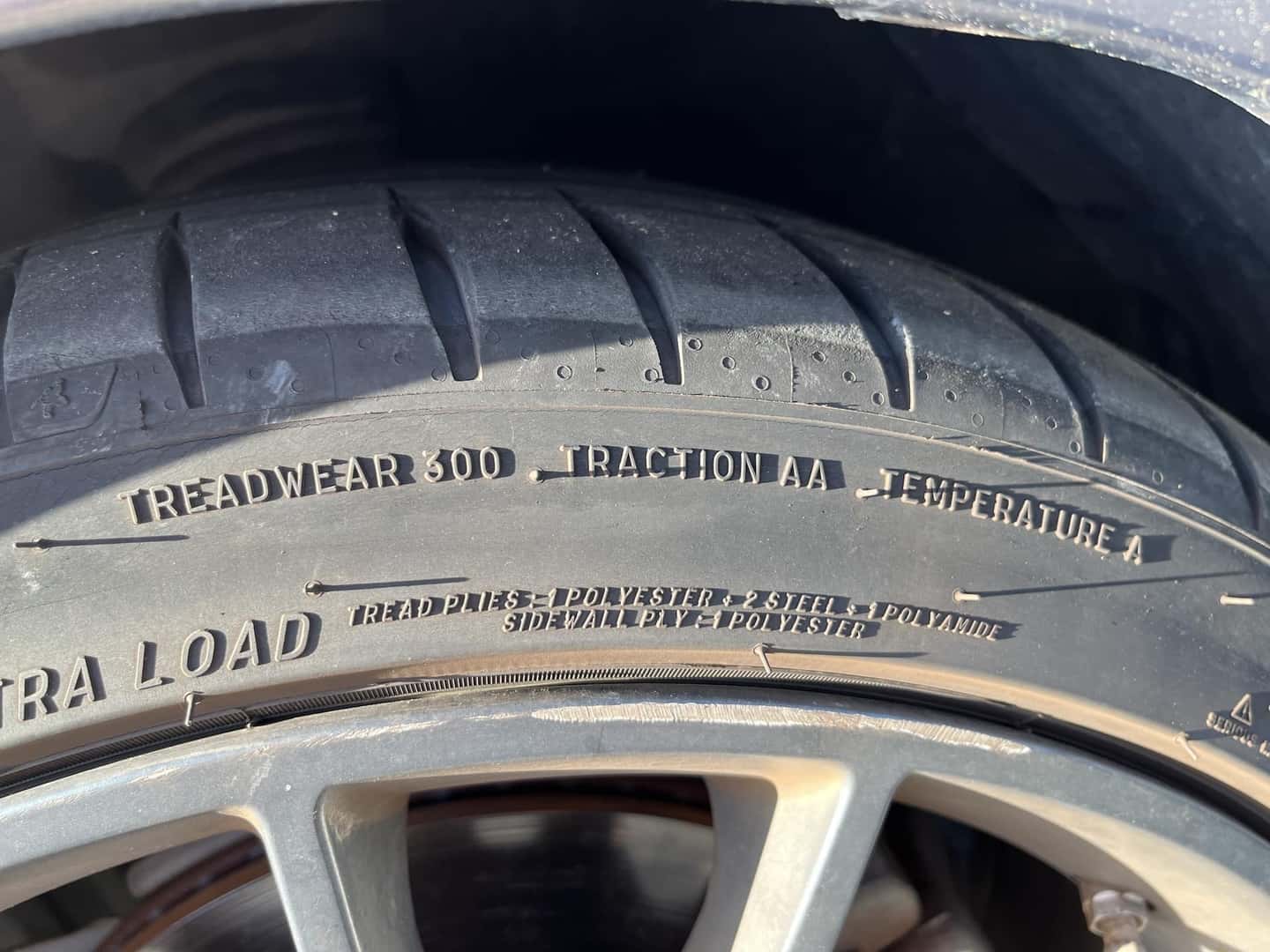
Tires have many properties, such as tread life, noise, and surface recommendations, but their primary performance metric is traction. Because traction is significantly reduced on wet surfaces, tires are assigned a wet-surface traction rating. These codes are found on the sidewall after the word “Traction.” These grades are similar to academic grades, ranging from best to worst:
AA (Highest) Offers superior wet braking performance and grip.
A Excellent wet traction, with over 75% of tires rated A.
B Average traction performance, common in many standard tires.
C (Lowest) Lowest accepted rating for wet surfaces, generally found on older or less advanced tires.
Keep in mind that these are wet traction grades. Summer tires may have a lower traction grade but higher dry traction.
Tread Life Code
Appearing on the sidewall after the words “Tread life,” this code is of particular interest to many people purchasing replacement tires, as they are likely not to want to replace them again soon. The code indicates how long the tires are expected to last based on their compound and tread design. It is determined by how much tread was worn down after accumulating 7,200 miles on a government test track. However, these figures are provided by the manufacturer and can be subjective.
Because many factors influence tread life, such as road surface, average speed, the frequency & sharpness of curves, temperature, and driving style, the codes do not represent actual miles but can be compared with each other. For example, under equal conditions, a code of 600 is expected to last twice as long as a code of 300. However, a lower tread life may result from some other desirable trait of the tire. These are common tread life ratings by tire category.
100–300: Ultra-High-Performance (UHP) summer tires (high grip, lower life).
400–700: All-season touring tires (balanced performance and longevity).
600–800+: Touring tires designed for maximum, long-lasting wear.
Maximum Inflation
All tires will have a maximum inflation figure, usually located close to the wheel on the sidewall, followed by “PSI” (pounds per square inch). It is important to note that this is the maximum tire recommendation, not the vehicle. Manufacturers will have determined the recommended PSI for each tire to achieve optimum performance and handling, which may differ from the tire’s figure. The vehicle pressure ratings are located on the tire door jamb and should take priority over the tire maximum pressure rating.
Tire Assembly Locations
Hopefully, this is information you’ll never need. However, if you examine the string starting with DOT, the next two to three characters identify the specific factory location, similar to an airport code, but more difficult to decipher. The following set of characters indicates the production batch code, and as mentioned above, the numbers represent the week and year of the tire‘s manufacture. These details are useful in the event of a recall. In such cases, the effective codes will be announced, allowing you to determine if any of your tires are part of the recall.
Read Your Tire
Next time you wash, work on, or just spend time with your car, take a moment to “read” your tires and see what they reveal. If anything seems off, consult the Alderman Automotive Service Department to check if something needs attention. And if you’re looking at used cars at Alderman or elsewhere, be sure to check their age to determine if they might need replacement soon, even if the tread looks good.
0 comment(s) so far on What Your Tire Sidewalls Tell You